
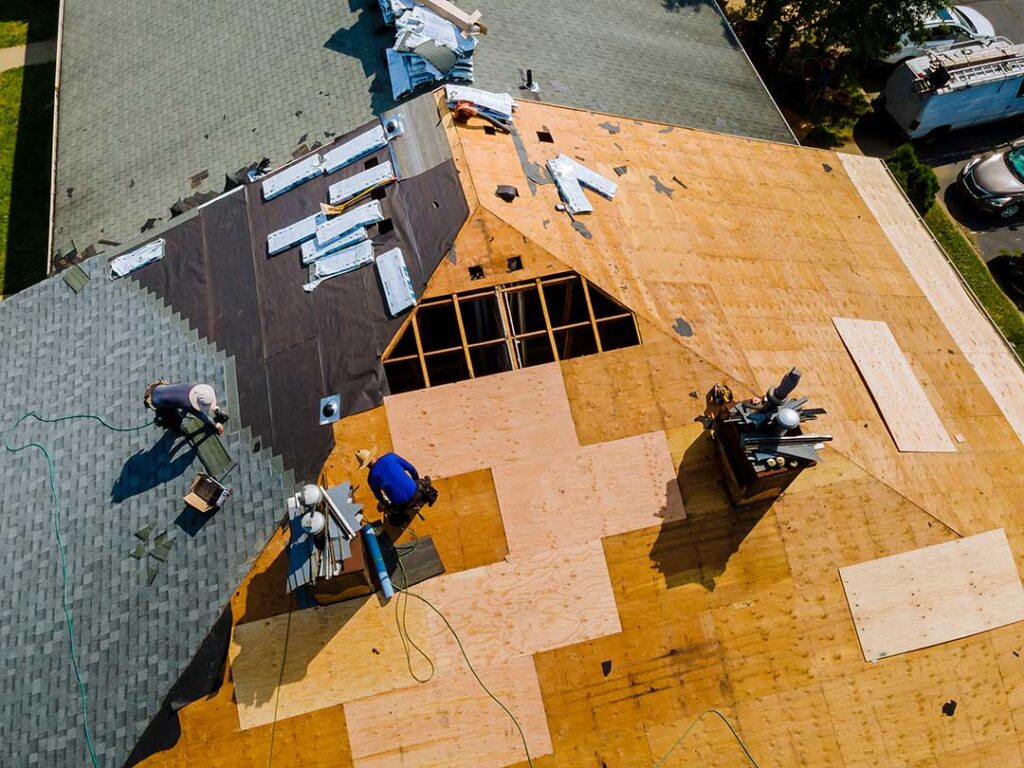
A roof leak rarely stays limited to the roof covering. Water can travel through insulation, wood framing, ceilings, and wall cavities before the first visible stain appears. In Fort Plain, NY, seasonal snow, freeze-thaw cycles, wind-driven rain, and summer humidity can all increase the consequences of a roof that is allowed to leak repeatedly.
Understanding how moisture moves through a house helps residents recognize problems earlier and avoid confusing cosmetic damage with structural damage.
What happens after water gets beneath the roof?
A leak begins when water passes through a damaged shingle, failed flashing joint, exposed fastener, deteriorated seal, or opening around a roof penetration. Once inside, gravity does not always carry the water straight down. Roof decking, underlayment, insulation, and framing can redirect it horizontally.
That means a ceiling stain may appear several feet away from the actual entry point.
Water may also remain hidden for hours or days, particularly when insulation absorbs it. A roof can look dry from below while moisture remains inside the roof assembly. Repeated wetting is generally more damaging than a single brief leak because building materials have less opportunity to dry.
Can a roof leak weaken the roof structure?
Yes. Persistent moisture can weaken roof decking, rafters, trusses, and other wood components by causing decay. Wood does not need to be visibly rotten before its strength begins to decline. Swelling, splitting, soft spots, and fastener corrosion can all reduce the reliability of the roof assembly.
Common structural effects include:
- Sagging roof decking between framing members
- Soft or deteriorated plywood and oriented strand board
- Rafters or trusses weakened by decay near leak locations
- Rusted nails, screws, brackets, and metal connectors
- Loose ceiling materials attached to damp framing
- Distortion around chimneys, roof valleys, skylights, or vent openings
A small stain does not automatically mean the structure is unsafe. However, a sagging ceiling, bowing roof line, cracking around ceiling joints, or visibly soft wood deserves prompt attention because these signs may indicate more than surface damage.
How can moisture affect ceilings and walls?
Water commonly damages drywall, plaster, paint, trim, and wallpaper before a homeowner can see the full extent of the problem. Drywall may discolor, bubble, crumble, or pull away from fasteners. Plaster can crack or loosen from its supporting surface.
Moisture may also move into wall cavities. If a roof leak reaches the top of an exterior wall, water can travel down around insulation, electrical wiring, and framing. This can create damage that remains concealed behind paint or wall finishes.
Possible signs include:
- Brown, yellow, or gray ceiling stains
- Peeling paint or bubbling wall surfaces
- Damp or musty odors
- Cracked joint compound near ceilings
- Warped trim or flooring below an exterior wall
- Repeated staining after rain or snowmelt
Painting over a stain may hide the appearance temporarily, but it does not remove moisture inside the assembly. The source of the leak and the condition of the affected materials must be understood first.
Why are insulation and ventilation part of the problem?
Wet insulation loses much of its ability to resist heat transfer. In a roof or attic, damp insulation can also slow drying and hold moisture against wood surfaces. This increases the chance of decay and may contribute to uneven indoor temperatures.
Poor attic ventilation can make the situation worse. Warm, moist air from the house may condense on cold roof components during winter. In a climate with freezing weather and frequent temperature changes, condensation can sometimes resemble a roof leak. The two problems may also occur together.
A roof inspection should therefore consider both exterior water entry and interior moisture movement. Signs of condensation may include frost or dampness on the underside of roof decking, widespread moisture rather than a localized stain, and problems that appear during very cold weather even without precipitation.
Can a leak create mold or indoor air concerns?

Moisture does not automatically mean mold, but damp building materials can support mold growth when they remain wet. Mold may develop on wood, paper-faced drywall, insulation surfaces, and dust accumulated in concealed spaces.
The likelihood increases when:
- Materials stay damp for more than a short period
- The affected area has limited air circulation
- Warm indoor air reaches a wet wall or ceiling cavity
- A leak has occurred repeatedly
- Wet insulation or debris remains in place
Mold is not the only concern. Persistent dampness can produce musty odors, damage finishes, and contribute to poor indoor comfort. Porous materials that are swollen, crumbling, or visibly contaminated may not be restorable and may require careful removal under appropriate safety practices.
Does winter weather make roof leaks more damaging?
Winter conditions can complicate both the cause and the progression of a leak. Snow may cover damaged roofing, while melting snow can enter openings around flashing, valleys, and roof edges. Ice buildup near eaves can sometimes prevent drainage, allowing water to move beneath roof coverings.
Freeze-thaw cycles create another source of stress. Water entering a crack or joint can freeze, expand, and enlarge the opening. Repeated cycles may loosen materials and increase leakage over time.
After a heavy snowfall or rapid warming period, residents may notice new ceiling stains, dripping around attic openings, or damp areas near exterior walls. These signs should not be dismissed simply because the roof appears intact from the ground.
What should be checked inside the home?
A careful visual check can help identify whether a leak is active or has caused broader damage. Look in the attic, if it can be accessed safely, for damp insulation, darkened wood, water trails, rusted fasteners, and daylight visible through the roof assembly.
Inside living areas, check ceilings, upper walls, closets, and rooms beneath roof valleys or plumbing and vent penetrations. A moisture meter can provide useful information, but readings need context because naturally varying materials may produce misleading results.
Do not walk on a wet or sagging ceiling, and avoid entering an attic if the floor is incomplete, lighting is poor, or electrical hazards may be present. Water near light fixtures, outlets, or wiring should be treated as a potential electrical hazard. If a ceiling is bulging, keeping people away from the area is prudent because saturated drywall or plaster can fall.
How quickly should roof leak damage be addressed?
The urgency depends on the amount of water, the location, and whether structural components are involved. Active dripping, a growing ceiling bulge, exposed electrical components, visible roof sagging, or water entering during current weather conditions requires prompt attention.
A minor stain from an old, fully resolved leak may not require emergency action, but it still deserves investigation if the cause is uncertain. Even a small recurring leak can gradually damage roof decking and framing.
The central question is not only whether water is visible today. It is whether moisture has entered materials that are difficult to see, whether those materials have dried completely, and whether the roof assembly remains capable of carrying expected snow, wind, and seasonal loads.
